Bernardo Bertolucci


Born
3/16/1941
Parma, Emilia-Romagna, Italia
Bernardo Bertolucci
Biography
Bernardo Bertolucci (/ˌbɜːrtəˈluːtʃi/ BUR-tə-LOO-chee; Italian: [berˈnardo bertoˈluttʃi]; 16 March 1941 – 26 November 2018) was an Italian film director and screenwriter with a career that spanned 50 years. Considered one of the greatest directors in the history of cinema, Bertolucci's work achieved international acclaim. With The Last Emperor (1987) he became the first Italian filmmaker to win the Academy Award for Best Director, and he received many other accolades including a BAFTA Award, a César Award, two Golden Globes, a Golden Lion for Lifetime Achievement, and an Honorary Palme d'Or. A protégé of Pier Paolo Pasolini, Bertolucci made his directorial debut at 22. His second film, Before the Revolution (1964), earned strong international reviews and has since gained classic status, being called a "masterpiece of Italian cinema" by Film4. His 1970 film The Conformist, an adaptation of the Alberto Moravia novel, is considered a classic of international cinema, and was nominated for an Academy Award for Best Adapted Screenplay and the prestigious Berlin Golden Bear. His 1972 erotic drama Last Tango in Paris was controversial due to its rape scene and, later, comments made by actress Maria Schneider about her treatment on set. Bertolucci's later films such as the historical epic 1900 (1976), the family drama La Luna (1979), and the darkly comedic Tragedy of a Ridiculous Man (1981), were also controversial but acclaimed. His 1987 film The Last Emperor, a biopic of Chinese monarch Puyi, was a critical and commercial success, earning rave reviews and sweeping the 60th Academy Awards (including Best Picture and Best Director). This was the start of what has since been described as his "Oriental Trilogy", a trio of films including The Sheltering Sky, an adaptation of the novel of the same name, and Little Buddha, a Buddhist religious epic, all three of which feature scores by Ryuichi Sakamoto. His 1996 film, Stealing Beauty, brought him his second of two Palme d'Or nominations. He continued directing well into the 21st century, releasing his final film, Me and You, in 2012. Bertolucci's films often deal with themes of politics, sexuality, history, class conflict and social taboos, and his style has influenced several filmmakers. Several of his films have appeared on lists of the greatest films of all time. Critics have remarked that what makes Bertolucci different than other directors is his masterful combination of "visual richness and visual freedom". Description above from the Wikipedia article Bernardo Bertolucci, licensed under CC-BY-SA, full list of contributors on Wikipedia.
Known For45 Movies

Ennio
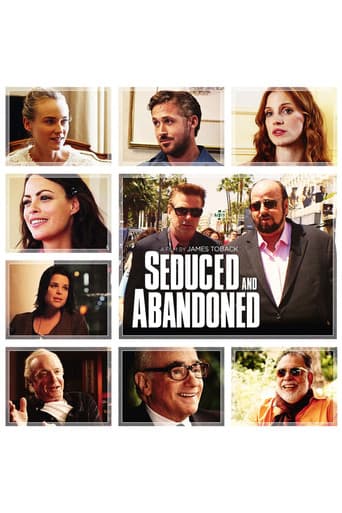
Seduced and Abandoned

Cinque mondi

Kurosawa's Way

Marlon Brando: An Actor Named Desire

Filmmakers in Action

ABCinema

Kurosawa: The Last Emperor

Venice 70: Future Reloaded

Playboy: The Story of X

We Are Cinema

… But Film Is My Mistress

Glauber, Claro

Jean Renoir: Part One - From La Belle Époque to World War II

The Cinema According to Bertolucci

Henri Langlois vu par...

Water and Sugar – Carlo Di Palma: The Colours of Life

Paul Bowles: The Cage Door Is Always Open

Great Directors

Golem, the Spirit of Exile

Cinema, Sex, Politics: Bertolucci Makes ‘The Dreamers’

An Opera of Violence

Bernardo Bertolucci, le dernier empereur du cinema

Claude Jutra: An Unfinished Story

La nostra magnifica ossessione - Bernardo Bertolucci e la sua generazione

Portrait Of My Father

Filmstudio, mon amour

Alida Valli: In Her Own Words

Behind the scenes: Last Tango in Paris

What Do You Know About Me

Porn to Be Free

The Ditvoorst Domains

How We Got the Italian Movie Business Into Trouble: The True Story of Franco and Ciccio

Because I Am a Genius! Lorenza Mazzetti

Chaplin Today: Limelight

The Treasure of His Youth: The Photographs of Paolo Di Paolo

Something to Do with Death

Bertolucci on Bertolucci

Cinecittà - I mestieri del cinema Bernardo Bertolucci

The True Life of Antonio H.

Elio Petri: Notes About a Filmmaker

In the Shade of the Conformist

Evviva Giuseppe

Whoever Says the Truth Shall Die
